
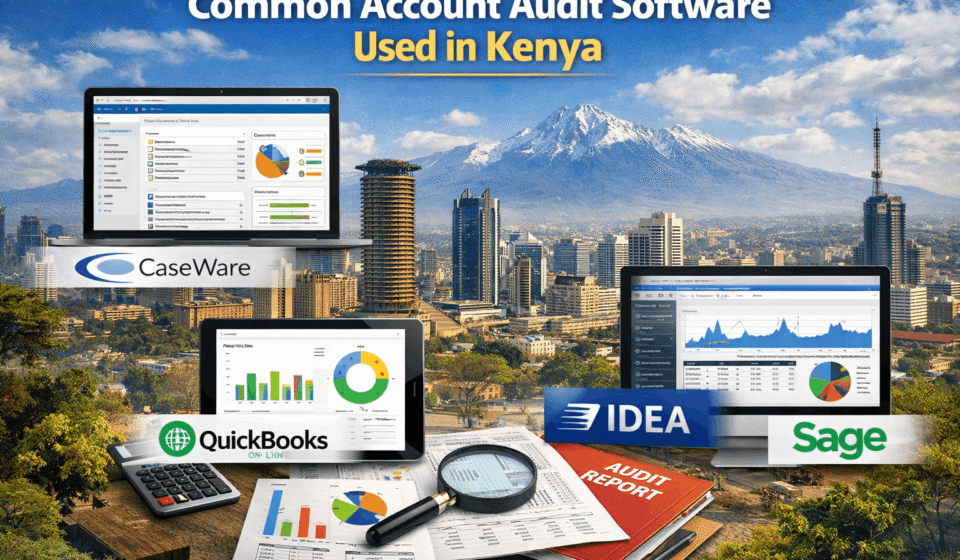
Common Account Audit Software Used in Kenya complete Guide 2026
Introduction to common account audit software used in Kenya
Why Audit Software Matters in Modern Businesses
Running a business without proper financial oversight is like driving at night without headlights. You might keep moving forward, but you are constantly at risk of making costly mistakes. This is where audit software becomes essential for modern businesses in Kenya. It helps companies track transactions, identify errors, and maintain accurate records that comply with regulatory requirements.
In Kenya, financial compliance is taken seriously, especially by authorities like the Kenya Revenue Authority. Businesses are expected to maintain clear and accurate financial records. Without proper systems in place, even small mistakes can lead to penalties or audits that disrupt operations. Audit software simplifies this entire process by automating record keeping and ensuring everything is organized and traceable.
Another important aspect is fraud detection. Manual systems often fail to detect irregularities in financial data. Audit software, on the other hand, continuously scans transactions and flags unusual patterns. This makes it easier for businesses to act quickly before minor issues turn into major financial losses. In simple terms, audit software acts like a digital guard that protects your financial health.
Growth of Digital Accounting in Kenya
Kenya has experienced a rapid shift toward digital financial systems over the past decade. The rise of mobile payment platforms such as M Pesa and the expansion of online banking have changed how businesses handle money. As financial transactions become more complex, the need for reliable audit tools has grown significantly.
Businesses are moving away from spreadsheets and manual bookkeeping toward cloud based solutions. This shift is driven by the need for real time data access and improved efficiency. With audit software, business owners can monitor their financial status at any time, from anywhere. This flexibility is especially valuable in today’s fast paced business environment.
The demand for audit software in Kenya continues to grow as more companies recognize its benefits. From small startups to large corporations, organizations are investing in digital tools to stay competitive. This trend reflects a broader global movement toward automation and data driven decision making.
Types of Audit Software Used in Kenya
Dedicated Audit Tools
CaseWare
CaseWare is one of the most widely used audit software solutions in Kenya, especially among professional audit firms. It is designed specifically for auditing tasks, making it highly efficient for managing complex financial data. Auditors use CaseWare to create working papers, document findings, and generate financial statements.
One of the key strengths of CaseWare is its structured approach to auditing. Instead of dealing with scattered files, users can manage all audit related information in one centralized platform. This reduces confusion and improves accuracy. It also allows teams to collaborate effectively, which is crucial for large audits involving multiple professionals.
Another advantage is compliance with international auditing standards. This makes CaseWare a preferred choice for firms that handle multinational clients or operate across borders. By using this software, auditors can ensure their work meets global expectations while maintaining local compliance.
IDEA Data Analysis
IDEA is a powerful tool designed for data analysis and forensic auditing. It is commonly used by large organizations and government institutions in Kenya. The software can process large volumes of financial data and identify patterns that may indicate fraud or errors.
What makes IDEA stand out is its ability to analyze complex datasets quickly. For example, it can detect duplicate transactions, missing entries, or unusual trends that might go unnoticed in manual reviews. This capability is particularly useful for audits that involve millions of records.
Despite its advantages, IDEA is not commonly used by small businesses due to its high cost and complexity. It requires specialized training to use effectively, which adds to the overall investment. However, for large scale audits, it remains one of the most reliable tools available.
Accounting Software with Audit Features
QuickBooks
QuickBooks is one of the most popular accounting tools among small and medium sized businesses in Kenya. While it is primarily an accounting platform, it includes features that support auditing processes. These include audit trails that track every transaction and record changes made by users.
The simplicity of QuickBooks makes it accessible to business owners who may not have a strong accounting background. It provides clear reports and dashboards that help users understand their financial position. This makes it easier to prepare for audits and respond to inquiries from regulators.
Another benefit is its cloud based nature. Users can access their financial data from any location, which is ideal for businesses with remote teams. QuickBooks also integrates with other tools, making it a flexible option for growing companies.
Sage Accounting
Sage has been a trusted name in Kenya’s accounting industry for many years. It is widely used by medium and large enterprises that require more advanced features. Sage offers comprehensive audit trails that allow auditors to track every financial transaction from start to finish.
One of the key strengths of Sage is its ability to handle complex financial operations. This includes inventory management, payroll, and multi currency transactions. These features make it suitable for businesses with diverse operations.
Sage also supports compliance with local regulations, which is crucial for businesses operating in Kenya. By using this software, companies can ensure their financial records meet the required standards and are ready for audits at any time.
Top Audit Software in Kenya
CaseWare Industry Standard
CaseWare stands as a benchmark in the audit software industry and many professional auditors rely on it for its powerful and reliable features. It helps users manage the entire audit process in one place, starting from planning and ending with final reporting. Auditors can organize working papers, track progress, and ensure compliance with international standards using this tool. Its structured approach reduces errors and improves efficiency during audits. Because of these strengths, many audit firms in Kenya choose CaseWare for handling complex financial reviews.
IDEA Advanced Data Analytics
IDEA delivers strong performance when it comes to analyzing large volumes of financial data. Organizations use it to examine complex datasets and uncover hidden patterns or inconsistencies. It helps auditors detect duplicate transactions, unusual entries, and potential fraud risks quickly. The software allows users to perform deep analysis without relying on manual processes. For companies that need detailed insights and data driven decisions, IDEA provides a highly effective solution.
ACL Analytics HighBond
ACL Analytics, now known as HighBond, focuses on risk management and compliance monitoring. Organizations use it to track financial activities and identify potential risks before they escalate. It supports continuous auditing, which means companies can monitor transactions regularly instead of waiting for periodic reviews. This proactive approach strengthens internal controls and improves accountability. Many businesses adopt ACL Analytics to maintain transparency and ensure they meet regulatory requirements.
QuickBooks Online
QuickBooks Online remains a popular choice among small businesses because it offers simplicity and affordability. Business owners use it to manage daily financial tasks such as invoicing, expense tracking, and reporting. The software includes audit trail features that record every transaction and change made in the system. This makes it easier to prepare for audits and maintain accurate records. Its cloud based access also allows users to manage finances from anywhere, which adds convenience and flexibility.
Sage Pastel
Sage Pastel provides a reliable solution for businesses that need advanced accounting and auditing capabilities. Companies use it to handle complex financial operations such as inventory management, payroll, and multi currency transactions. The software tracks every financial activity, giving auditors a clear view of all transactions. It also supports compliance with local regulations, which makes it a trusted option in Kenya. Businesses that require strong and scalable financial systems often choose Sage Pastel for long term use.
Emerging Audit and Accounting Tools
Zoho Books
Zoho Books is gaining popularity in Kenya due to its affordability and user friendly interface. It also offers features that support tax compliance and financial reporting.
Xero
Xero is known for its modern design and strong integration capabilities. It is particularly popular among startups and tech focused businesses.
SAP Business One
SAP Business One is designed for large enterprises with complex needs. It provides detailed audit trails and advanced reporting features.
Comparison of Popular Audit Software
| Software | Best For | Key Feature | Price Range |
|---|---|---|---|
| CaseWare | Audit firms | Working papers automation | High |
| IDEA | Large audits | Advanced data analysis | Very High |
| QuickBooks | SMEs | Audit trails | Moderate |
| Sage | Medium to large businesses | Full accounting system | High |
| Zoho Books | Small businesses | Cloud accounting | Low |
| SAP Business One | Enterprises | ERP integration | Very High |
Benefits of Using Audit Software
Audit software offers numerous advantages that go beyond basic accounting. One of the most significant benefits is improved accuracy. Automated systems reduce the likelihood of human error, ensuring that financial records are reliable and consistent.
Another benefit is efficiency. Tasks that once took hours or even days can now be completed in minutes. This allows businesses to focus on strategic activities rather than administrative work. It also speeds up the audit process, which is beneficial for both auditors and clients.
Transparency is another key advantage. Audit software provides a clear record of all financial activities, making it easier to identify and address issues. This builds trust with stakeholders and ensures compliance with regulations.
Challenges in Adoption
Despite its benefits, adopting audit software can be challenging. Cost is a major factor, especially for small businesses with limited budgets. Some software solutions require significant upfront investment, which can be a barrier.
Another challenge is the learning curve. Employees may need training to use the software effectively. Without proper training, businesses may not fully utilize the features available.
Integration with existing systems can also be an issue. Businesses need to ensure that their chosen software works seamlessly with their current processes.
How to Choose the Right Audit Software
Choosing the right audit software requires careful consideration of your business needs. Start by evaluating your budget and the complexity of your operations. Small businesses may prefer simple and affordable solutions, while larger organizations may require advanced tools.
Consider the features offered by each software. Look for tools that provide audit trails, reporting capabilities, and integration with other systems. It is also important to choose software that complies with local regulations.
Finally, think about scalability. As your business grows, your software should be able to handle increased demands. Selecting a flexible solution will save you time and money in the long run.
Future Trends in Kenya’s Audit Technology
The future of audit software in Kenya is shaped by advancements in technology. Artificial intelligence is playing a growing role in automating audit processes and improving accuracy. These tools can analyze data faster and provide deeper insights.
Cloud computing is another important trend. It allows businesses to access their financial data from anywhere, making it easier to manage operations remotely. This is particularly important in a world where remote work is becoming more common.
As technology continues to evolve, audit software will become even more powerful and accessible. Businesses that embrace these changes will be better positioned to succeed in a competitive market.
Conclusion
Audit software has become an essential tool for businesses in Kenya. It improves accuracy, enhances efficiency, and ensures compliance with financial regulations. From dedicated audit tools like CaseWare and IDEA to versatile platforms like QuickBooks and Sage, there are solutions available for every type of business.
Choosing the right software depends on your specific needs and resources. By investing in the right tools, businesses can streamline their financial processes and gain a competitive advantage.
FAQs