
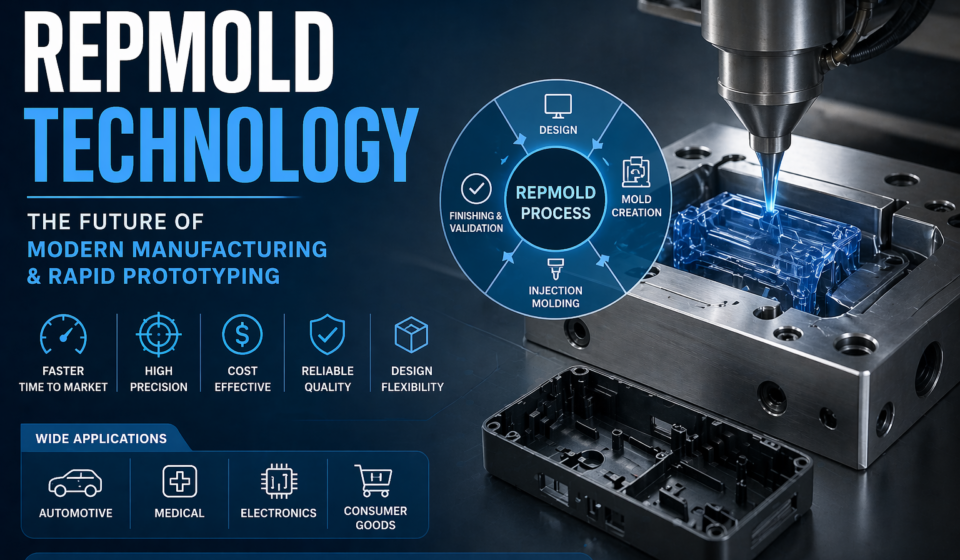
Complete Expert Guide about Repmold Technology 2026
Introduction: Why Repmold Technology Matters More Than Ever in 2026
Repmold technology has become one of the most important forces reshaping global manufacturing in 2026. Industries are facing faster product cycles, tighter margins, and growing sustainability pressure. Repmold technology answers all three challenges with precision, speed, and cost-efficiency. Manufacturers who understand it deeply hold a clear competitive advantage today. In this 2026 guide, we cover every aspect of repmold technology from the ground up. You will learn the process, the latest trends, real-world applications, and expert selection tips. This guide is your single resource for mastering repmold technology in 2026 and beyond.
What Is Repmold Technology? A 2026 Definition
Repmold technology is a precision-based, repeatable molding process. It produces identical, high-quality parts consistently across large and small production runs. The word “repmold” merges “repetitive” and “mold” to describe its core function. The goal is simple: produce the exact same part every single time. In 2026, this technology has expanded well beyond basic injection molding.
Modern repmold technology now integrates artificial intelligence, robotics, and advanced sensor systems. These additions make the process smarter, faster, and more accurate than ever before. Engineers use digital twins to simulate mold behavior before physical production begins. This approach dramatically reduces trial-and-error cycles and saves both time and money.
How Repmold Technology Works in 2026
The core process of repmold technology follows a logical, structured workflow. In 2026, each step now includes smarter tools and digital enhancements.
Step 1: AI-Assisted Digital Design
Engineers start by creating a precise 3D CAD model of the required part. AI-powered design tools now flag potential issues before fabrication begins. These tools analyze wall thickness, draft angles, and material flow paths. Catching issues early saves weeks of rework and significant production costs.
Step 2: Digital Twin Simulation
Before any physical mold gets built, engineers run digital twin simulations. A digital twin is a virtual replica of the entire mold and production environment. It predicts how materials will flow, cool, and solidify inside the mold. Teams validate their designs virtually and refine them with zero physical waste.
Step 3: Precision Mold Fabrication
The approved mold design moves to physical fabrication using CNC machining. High-speed 5-axis CNC machines produce molds with exceptional accuracy. In 2026, hybrid fabrication combining CNC and metal 3D printing is increasingly common. This hybrid approach creates complex internal cooling channels that traditional machining cannot achieve.
Step 4: Smart Material Injection
The selected material gets injected into the mold under precisely controlled conditions. Smart sensors monitor pressure, temperature, and flow rate in real time. Any deviation triggers an automatic correction to maintain product consistency. This closed-loop control system virtually eliminates production defects.
Step 5: Optimized Rapid Cooling
Advanced conformal cooling channels speed up solidification without causing warping. These channels follow the exact contour of the part geometry. Water or cooling fluid flows through them to remove heat efficiently. Faster cooling cycles directly increase production output per hour.
Step 6: Automated Ejection and Inspection
Robotic ejection systems remove finished parts from the mold with zero damage. Automated vision inspection systems then scan every part immediately. AI-powered cameras detect surface defects, dimensional errors, and structural flaws. Only perfectly verified parts proceed to packaging or downstream processes.
Key Components of Repmold Technology in 2026
| Component | 2026 Function | Key Upgrade vs. Previous Years |
|---|---|---|
| AI-Powered CAD Software | Designs and validates molds digitally | Auto-detects design flaws before fabrication |
| Digital Twin Platform | Simulates production environment virtually | Eliminates costly physical prototypes |
| 5-Axis CNC Machine | Fabricates high-precision mold cavities | Faster, more complex geometry capability |
| Smart Injection Unit | Controls material flow with sensor feedback | Real-time closed-loop pressure and temp control |
| Conformal Cooling System | Speeds up part solidification uniformly | 30-40% faster cycle times vs. traditional cooling |
| Robotic Ejection System | Removes finished parts without damage | Zero-contact handling for delicate geometries |
| AI Vision Inspection | Scans every part for defects automatically | Near-zero defect escape rate in production |
Top Benefits of Repmold Technology in 2026
Repmold technology delivers compelling advantages. These benefits keep growing as the technology evolves in 2026.
1. Dramatically Faster Production Cycles
Conformal cooling and AI-controlled injection cut cycle times significantly. Many facilities report 30 to 50 percent faster cycles compared to 2022 systems. Faster cycles mean more parts per shift with the same equipment footprint. This speed advantage directly improves revenue and delivery performance.
2. Exceptional Part Consistency
AI-controlled injection and real-time sensor feedback eliminate human variability. Every part matches the digital specification with extremely tight tolerances. Industries like medical devices and aerospace depend on this level of consistency. Zero-defect production targets are now achievable in repmold setups.
3. Lower Cost Per Unit at Scale
Higher cycle speeds and reduced scrap rates cut per-unit production costs. Automation reduces labor dependency across the entire production process. Companies produce more parts with fewer operators and less downtime. This cost structure becomes a major financial advantage at high volumes.
4. Broader Material Compatibility
Repmold technology in 2026 handles a wider range of materials than ever before. Bio-based plastics, recycled engineering polymers, and advanced composites are now processable. Material scientists and mold engineers collaborate to unlock new processing windows. This expansion opens repmold technology to new industries and applications.
5. Sustainability and Waste Reduction
Closed-loop material recovery systems recycle sprues and runners automatically. Conformal cooling reduces energy consumption per cycle noticeably. Many repmold facilities now pursue ISO 14001 environmental certifications. Brands value this sustainability advantage for regulatory compliance and customer trust.
6. Rapid Design Iteration
Digital twins allow engineers to test dozens of design variations virtually. Physical iteration happens only when the digital model is fully validated. This approach compresses product development timelines from months to weeks. Startups and innovation labs especially benefit from this speed advantage.
Repmold Technology Applications in 2026
In 2026, repmold technology reaches into more industries than ever before. Here is a detailed look at the leading application areas.
Electric Vehicle Manufacturing
The EV boom is one of the biggest drivers of repmold technology growth in 2026. Battery housings, charging connector parts, and structural brackets all use repmold processes. Lightweight polymer components replace heavy metal parts to extend driving range. Repmold technology supports the high-volume, high-precision needs of EV production lines.
Medical and Biomedical Devices
Medical device manufacturing demands the strictest quality standards in any industry. Repmold technology delivers cleanroom-ready production with full traceability. Biosensor housings, drug delivery components, and surgical instrument parts use this process. In 2026, FDA-compliant repmold setups are standard for Class II and Class III device manufacturers.
Wearable Technology and Smart Devices
Wearable tech requires miniaturized, lightweight, and precisely shaped components. Repmold technology handles micro-scale features with consistent accuracy. Smartwatch cases, fitness tracker housings, and AR/VR headset parts all rely on repmold processes. The consumer electronics market demands rapid design cycles that repmold technology easily supports.
Aerospace and Defense Components
Aerospace parts face extreme thermal, mechanical, and chemical stress conditions. High-performance engineering polymers processed via repmold technology meet these demands. Interior cabin components, ducting systems, and non-structural brackets benefit from this approach. Weight reduction and dimensional accuracy are non-negotiable in aerospace applications.
Sustainable Packaging Solutions
Brands are replacing single-use plastics with repmold-produced sustainable alternatives. Bio-based and compostable materials now process through repmold systems effectively. Custom packaging shapes and premium finishes add brand value at scale. Repmold technology makes sustainable packaging both practical and economically viable.
Robotics and Automation Equipment
The robotics industry boom is creating massive demand for precision polymer components. Gripper housings, sensor enclosures, and cable management parts use repmold production. High mix, lower volume runs suit the robotics industry well. Repmold technology’s flexible tooling options support this varied demand pattern.
Construction Technology
Modular construction systems use repmold-produced connectors, clips, and panel inserts. Durable exterior cladding components benefit from repmold precision and repeatability. Architects and builders get custom-designed elements at competitive production costs. In 2026, smart building systems increasingly rely on repmold-produced sensor housings and mounting hardware.
Repmold Technology vs. Competing Manufacturing Methods in 2026
Understanding how repmold technology compares helps decision-makers choose wisely.
| Feature | Repmold Technology | Traditional Injection Molding | 3D Printing | CNC Machining |
|---|---|---|---|---|
| Production Speed | Very High | High | Low to Medium | Medium |
| Part Consistency | Excellent | Good | Variable | Excellent |
| Tooling Cost | Moderate | High | None | None |
| Per Unit Cost (High Volume) | Very Low | Low | High | High |
| Design Complexity | High | Moderate | Very High | High |
| Material Options | Very Broad | Broad | Limited | Broad |
| Minimum Order Quantity | Low to High | High | Very Low | Very Low |
| Surface Finish Quality | Excellent | Good | Moderate | Excellent |
| Sustainability Score | High | Moderate | Low | Moderate |
Repmold technology leads across most critical categories. It sits in the ideal zone between speed, quality, cost, and flexibility.
2026 Trends Shaping Repmold Technology
Several powerful trends are defining where repmold technology is heading this year.
AI and Machine Learning Integration
AI now manages process parameters dynamically during production runs. Machine learning models predict tool wear and schedule maintenance proactively. This predictive maintenance reduces unplanned downtime by significant margins. Manufacturers gain higher uptime and more consistent quality through AI-driven process control.
Industry 4.0 and Smart Factory Adoption
Repmold production lines connect fully to factory-wide digital networks in 2026. Real-time production data flows to dashboards and enterprise resource planning systems. Factory managers track output, quality metrics, and energy use from anywhere. Industry 4.0 connectivity transforms repmold operations into fully transparent production environments.
Sustainable and Bio-Based Materials
Brands face growing pressure to eliminate petroleum-based plastics. Repmold technology now processes PLA, PHA, and other bio-based alternatives reliably. Material scientists are developing grades that match the performance of conventional polymers. This shift supports circular economy goals without sacrificing part performance or production speed.
Micro-Molding for Miniaturized Products
Miniaturization continues to push precision requirements to extraordinary levels. Micro-molded parts with features smaller than a millimeter are now standard in medical and electronics sectors. Repmold technology supports micro-molding with specialized tooling and ultra-precise injection control. This capability opens doors to next-generation product designs previously considered impossible.
Decentralized Manufacturing Networks
Global supply chain disruptions have accelerated distributed manufacturing adoption. Companies now run multiple smaller repmold facilities closer to end markets. This decentralization reduces lead times and logistics risks simultaneously. Cloud-connected repmold systems share design data instantly across global facility networks.
Hybrid Additive and Subtractive Tooling
Combining metal 3D printing with CNC finishing creates superior mold tooling. Additive manufacturing builds complex conformal cooling networks inside the mold body. CNC finishing then achieves the surface precision that injection molding demands. This hybrid tooling approach improves part quality and cycle times together.
Materials Driving Repmold Technology in 2026
Material science is advancing rapidly and expanding repmold technology’s reach.
High-Performance Engineering Polymers
PEEK, PEI (Ultem), and PPS are increasingly common in repmold applications. These materials withstand temperatures above 200 degrees Celsius reliably. They replace metals in weight-sensitive applications across aerospace and medical sectors. Processing requires specialized equipment but delivers outstanding performance returns.
Recycled and Circular Economy Materials
Post-consumer recycled (PCR) polymers now meet production-grade quality standards. Advanced sorting and purification technologies remove contaminants effectively. Brands achieve sustainability goals while maintaining part quality and dimensional consistency. Repmold technology’s precision control manages the variability inherent in recycled material streams.
Liquid Silicone Rubber (LSR)
LSR molding is growing rapidly in medical, wearable, and consumer applications. It offers biocompatibility, flexibility, and extreme temperature resistance. Automated LSR injection systems eliminate contamination risks in cleanroom environments. This material is now one of the fastest-growing segments in repmold technology.
Composite and Filled Materials
Glass-filled, carbon-filled, and mineral-filled polymers deliver enhanced mechanical properties. Repmold technology processes these abrasive materials with wear-resistant tooling. Engineers achieve strength and stiffness levels approaching metals at a fraction of the weight. The automotive and aerospace industries drive the highest demand for these filled materials.
How to Select a Repmold Technology Partner in 2026
Choosing the right partner significantly impacts your production outcomes. Evaluate these factors carefully before signing any agreement.
Technical Capability Assessment
Confirm the partner operates modern 5-axis CNC equipment and AI-assisted quality systems. Ask to see examples of parts with complexity similar to your requirements. Request tolerance capability data and surface finish samples. A capable partner shares this information openly and confidently.
Industry-Specific Experience
Repmold requirements vary significantly between industries. A medical device molder needs different certifications than an automotive supplier. Choose a partner with documented experience in your specific industry. Their process knowledge will save you time and prevent costly compliance issues.
Quality Management Systems
ISO 9001 certification is a basic requirement for any serious repmold partner. Industry-specific certifications like IATF 16949 for automotive or ISO 13485 for medical add further confidence. Ask about their defect rates, corrective action processes, and customer audit history. Strong quality systems protect your brand and supply chain reliability.
Digital Collaboration Capabilities
Modern repmold partners offer cloud-based project management and real-time production visibility. You should access live dashboards showing production counts, quality data, and delivery status. Digital collaboration tools speed up design approvals and change management significantly. Partners without these capabilities create unnecessary delays and communication gaps.
Sustainability Credentials
In 2026, sustainability is no longer optional for supply chain partners. Ask about their energy sources, waste diversion rates, and material recycling programs. Partners pursuing ISO 14001 certification demonstrate genuine environmental commitment. Aligning with sustainable partners protects your brand from supply chain reputational risks.
Common Mistakes to Avoid with Repmold Technology
Even experienced teams make avoidable mistakes. Learn from these common errors.
Skipping Design for Manufacturability Reviews
Rushing into mold fabrication without a DFM review creates expensive problems. Wall thickness inconsistencies, poor draft angles, and problematic parting lines all cause defects. A thorough DFM review adds days upfront but saves weeks of rework downstream. Always complete a formal DFM review before approving any mold design.
Choosing Material Based Only on Cost
The cheapest material rarely delivers the best outcome over a product’s full lifecycle. Factor in processing cost, cycle time impact, and part performance when selecting materials. A slightly more expensive material might cut cycle times and reduce scrap enough to save money overall. Make material decisions based on total cost of ownership, not just raw material price.
Underestimating Tooling Lead Time
High-quality mold fabrication takes time. Rushing the tooling phase leads to inferior surface finishes and dimensional inaccuracies. Plan your tooling lead time realistically into your product launch schedule. Buffer time for validation, adjustments, and first-article inspection is always necessary.
Ignoring Cooling System Design
Cooling system design often receives less attention than it deserves. Poor cooling leads to warped parts, extended cycle times, and inconsistent quality. Invest in conformal cooling channel design from the beginning of the mold design phase. The cycle time and quality improvements justify the additional engineering investment.
Repmold Technology Cost Guide for 2026
Understanding cost structure helps budget planning significantly. Here is a practical 2026 cost reference.
| Production Scenario | Tooling Cost Range | Per-Unit Cost Range | Recommended Volume |
|---|---|---|---|
| Rapid Prototype Tooling | $1,500 to $8,000 | $5 to $25 per part | 50 to 500 parts |
| Bridge Production Tooling | $8,000 to $30,000 | $1 to $8 per part | 500 to 10,000 parts |
| Production Tooling (Aluminum) | $15,000 to $50,000 | $0.50 to $3 per part | 10,000 to 100,000 parts |
| Production Tooling (Steel) | $30,000 to $150,000+ | $0.10 to $1 per part | 100,000+ parts |
Note: Costs vary based on part complexity, material, and geographic location of production. Always request detailed quotes from multiple qualified suppliers for accurate budget planning.
Conclusion: Your 2026 Repmold Technology Action Plan
Repmold technology in 2026 is smarter, faster, greener, and more capable than at any previous point. AI-driven process control, digital twin simulation, and advanced materials are rewriting what manufacturers can achieve. The industries winning in 2026 are those embracing repmold technology as a strategic production asset. From electric vehicles to wearable medical devices, this technology powers the products defining our future. The key is choosing the right partners, planning tooling investments carefully, and staying current with material innovations. Companies that treat repmold technology as a long-term competitive advantage will outpace those who treat it as just a production tool. Start your 2026 repmold technology journey with a clear strategy, reliable partners, and an eye on the trends shaping the next decade of manufacturing.
Frequently Asked Questions (FAQs)
Q1. What makes repmold technology different in 2026 compared to earlier years?
Repmold technology in 2026 integrates AI, digital twins, conformal cooling, and robotic automation. These additions deliver faster cycle times, near-zero defects, and smarter process control than earlier versions of the technology.
Q2. Which industries are growing fastest with repmold technology in 2026?
Electric vehicles, wearable technology, medical devices, and sustainable packaging are the fastest-growing sectors. These industries demand the speed, precision, and material flexibility that repmold technology delivers exceptionally well.
Q3. How does AI improve repmold technology production?
AI monitors process parameters in real time and adjusts them automatically to maintain quality. It also predicts equipment wear and schedules maintenance before failures occur, dramatically reducing production downtime.
Q4. What is a digital twin in repmold technology?
A digital twin is a virtual simulation of the mold and production environment. Engineers use it to validate designs and predict problems before building any physical tooling, saving time and money significantly.
Q5. Can repmold technology process sustainable and bio-based materials?
Yes, modern repmold systems process PLA, PHA, recycled polymers, and other bio-based materials effectively. Material science advances in 2026 have made these sustainable options increasingly compatible with high-volume repmold production.
Q6. How much does repmold tooling cost in 2026?
Tooling costs range from $1,500 for simple prototype tools to over $150,000 for high-volume steel production molds. The right tooling tier depends on your production volume, part complexity, and quality requirements.
Q7. What is conformal cooling and why does it matter?
Conformal cooling channels follow the exact shape of the part inside the mold. They cool parts faster and more uniformly than traditional straight-line cooling, reducing cycle time by 30 to 40 percent in many applications.
Q8. Is repmold technology suitable for micro-scale components?
Yes, micro-molding is one of the fastest-growing areas of repmold technology in 2026. Specialized tooling and ultra-precise injection control allow production of features smaller than one millimeter consistently.
Q9. What certifications should a repmold technology partner hold?
ISO 9001 is the basic quality certification every partner should hold. Additional certifications like IATF 16949 for automotive or ISO 13485 for medical devices signal specialized expertise and process discipline.
Q10. How does repmold technology support sustainability goals in 2026?
Repmold technology minimizes material waste through precision molding and closed-loop recycling systems. It also processes bio-based and recycled materials, helping brands meet sustainability targets without compromising part performance or production speed.
Q11. What is the lead time for repmold tooling in 2026?
Simple prototype tooling can be ready in as few as five to seven business days. Complex production-grade steel tooling typically requires four to ten weeks, including design, fabrication, validation, and first-article inspection.
Q12. How do I choose the best repmold technology partner in 2026?
Evaluate partners based on equipment capability, industry-specific certifications, digital collaboration tools, and sustainability credentials. Request sample parts, tolerance data, and customer references before making any final commitment.