
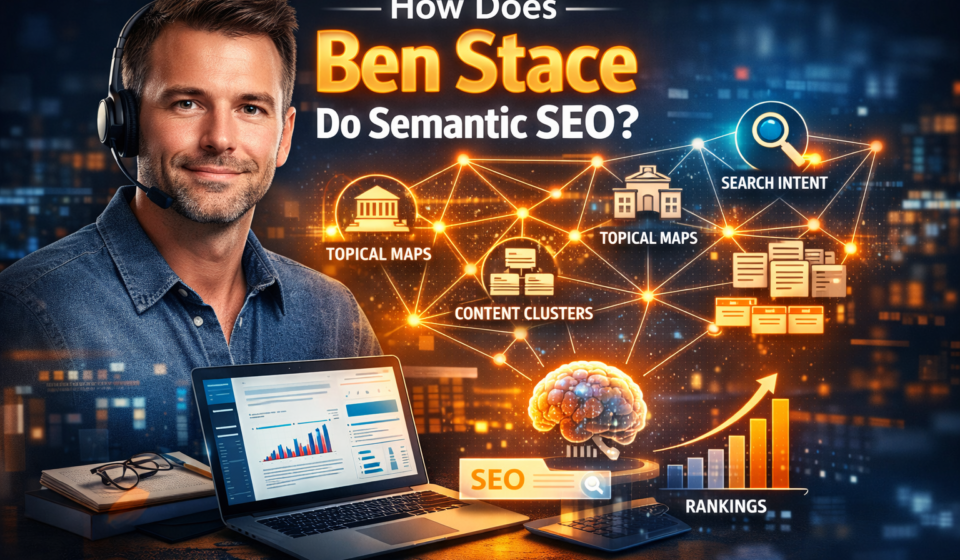
how does ben stace do semantic seo 2026 guide
Who Is Ben Stace?
Background and expertise
If you have been exploring modern SEO strategies, you have likely come across the name Ben Stace. He is known for focusing on how search engines understand meaning instead of simply matching keywords. Unlike traditional SEO professionals who rely heavily on keyword density and backlinks, his work is rooted in understanding language, structure, and search behavior.
His approach developed as search engines became more intelligent. Rather than chasing rankings through shortcuts, he built frameworks that emphasize topical authority, structured content, and contextual relevance. Over time, his strategies gained attention because they produced consistent and measurable improvements in rankings and traffic. Many marketers now study his methods because they offer a more stable and future proof way to grow online visibility.
Why he is popular in modern SEO
His popularity is tied directly to how search engines have evolved. Modern algorithms no longer rely on simple keyword matching. They analyze meaning, intent, and relationships between topics. Ben Stace adapted early to this shift and built systems that align with it.
He is also known for simplifying complex SEO ideas into actionable frameworks. Instead of vague advice, he provides structured methods such as topical mapping and semantic clustering. Businesses that apply these strategies often see stronger performance because their content becomes more aligned with user intent. This practical and results driven approach is a major reason his influence continues to grow.
What Is Semantic SEO?
Evolution from traditional SEO
SEO used to be straightforward. You would choose a keyword, include it throughout your content, and aim to rank for that term. That approach worked when search engines were less advanced. Today, things are very different.
Semantic SEO focuses on understanding the full meaning behind a search query. Instead of optimizing for one keyword, you create content that covers the entire topic in depth. This includes related concepts, common questions, and supporting information. The goal is to provide a complete answer rather than a partial one.
Think of it like building a library instead of a single book. Each page contributes to a broader understanding, and together they establish authority on a subject. This shift from isolated keywords to connected knowledge is at the core of semantic SEO.
Role of Google algorithms (BERT, MUM)
Modern search engines use advanced systems to interpret language. Technologies like BERT and MUM help Google understand context, nuance, and intent. They analyze how words relate to each other and what users are actually trying to find.
This means content must be written in a natural and comprehensive way. Simply repeating keywords is no longer effective. Instead, content needs to answer questions clearly and provide meaningful insights. Ben Stace’s approach works because it aligns perfectly with how these systems evaluate information.
Core Philosophy Behind Ben Stace’s Approach
Moving beyond keywords
A major part of his philosophy is shifting away from keyword obsession. Keywords still matter, but they are not the foundation. The real focus is on building topic authority.
When a website covers a subject in depth, it signals expertise. Search engines recognize this and reward it with higher rankings. Instead of creating random articles, his strategy involves building a connected structure where each piece of content supports the others.
Focus on meaning and context
Another key principle is understanding meaning and context. Content should reflect how topics relate to each other. This involves identifying important concepts, explaining them clearly, and connecting them within the content.
By doing this, you create a network of information that mirrors how search engines organize knowledge. This makes it easier for them to understand your content and determine its relevance.
Step-by-Step: How Ben Stace Does Semantic SEO
Step 1: Topical Mapping
The process begins with creating a topical map. This is a structured plan that outlines all the subtopics related to a main subject. It acts as a roadmap for content creation.
For example, if your main topic is digital marketing, your map might include SEO, social media, email marketing, and analytics. Each of these areas can then be expanded into detailed content. This ensures that your coverage is complete and organized.
Step 2: Entity Optimization
Entities are specific concepts such as people, places, or ideas. Instead of focusing only on keywords, this approach identifies and optimizes for these entities.
By clearly defining entities in your content, you help search engines understand what your page is about. This improves relevance and increases the chances of ranking for related queries.
Step 3: Search Intent Mapping
Understanding user intent is critical. Every search has a purpose, whether it is to learn something, find a specific page, or make a purchase.
Content should be designed to match this intent. Informational queries require detailed explanations, while transactional queries need clear calls to action. Aligning content with intent improves both rankings and user experience.
Step 4: Content Clustering
Content clustering involves grouping related articles around a central topic. A main page covers the broad subject, while supporting pages dive into specific areas.
These pages are linked together, creating a strong internal structure. This helps search engines see the relationship between topics and strengthens overall authority.
Step 5: Internal Linking Strategy
Internal links play a crucial role in semantic SEO. They connect related content and guide both users and search engines through your site.
A well planned linking strategy ensures that important pages receive more visibility. It also reinforces the connections between topics, which improves understanding and ranking potential.
Step 6: Semantic Gap Analysis
This step involves identifying missing information. By analyzing top ranking pages, you can find gaps in your content.
Filling these gaps with detailed and relevant information gives your content an advantage. It makes your page more comprehensive and increases its chances of ranking higher.
Tools Used by Ben Stace
Semantic SEO writing tools
Various tools are used to support semantic SEO strategies. These tools help identify related topics, suggest entities, and analyze content structure.
They provide insights that make it easier to create comprehensive and well organized content. While tools are helpful, the real value comes from applying the insights correctly.
AI-driven analysis
Artificial intelligence plays a major role in modern SEO. It can process large amounts of data and identify patterns that would be difficult to detect manually.
By using AI, marketers can improve efficiency and make more informed decisions. This allows them to refine their strategies and achieve better results.
Real Case Studies and Results
Traffic growth examples
Many businesses have seen significant improvements after applying semantic SEO strategies. Traffic increases are often substantial because content becomes more relevant and comprehensive.
In some cases, websites experience several times their original traffic within months. This growth is driven by better alignment with user intent and improved content quality.
Business impact
The impact goes beyond traffic. Higher quality content leads to better engagement, longer time on site, and increased conversions.
When users find exactly what they need, they are more likely to trust the brand. This builds long term value and strengthens overall performance.
Semantic SEO vs Traditional SEO
| Feature | Traditional SEO | Semantic SEO |
|---|---|---|
| Focus | Keywords | Topics and entities |
| Content | Isolated pages | Connected clusters |
| Strategy | Keyword repetition | Context and intent |
| Results | Short term gains | Long term authority |
| Alignment with search engines | Limited | Strong |
Why Ben Stace’s Strategy Works in 2026
Search engines now prioritize depth, relevance, and authority. His approach aligns with these priorities by focusing on comprehensive coverage and meaningful connections.
Instead of trying to manipulate rankings, it builds genuine value. This makes it more sustainable and effective over time.
How You Can Apply His Strategy
To start applying this approach, focus on building a structured content plan. Identify your main topic and break it down into smaller sections.
Create detailed content for each section and link them together. Pay attention to user intent and ensure your content provides clear and useful answers. Over time, this will strengthen your authority and improve your rankings.
Common Mistakes to Avoid
One common mistake is creating content without a clear structure. Random articles do not build authority.
Another issue is ignoring user intent. Content that does not match what users are looking for will struggle to perform. Overusing keywords and neglecting internal linking are also frequent problems. Avoiding these mistakes will significantly improve your results.
Conclusion
Ben Stace’s approach to semantic SEO reflects the direction in which search engines are evolving. By focusing on meaning, context, and comprehensive coverage, it provides a more effective way to build online visibility.
This strategy is not about quick wins. It is about creating a strong foundation that supports long term growth. When applied correctly, it can transform how your website performs and how users interact with your content.
FAQs
1. What is semantic SEO in simple terms?
It is an approach that focuses on understanding the meaning behind search queries and creating content that fully answers them.
2. Why is topical authority important?
It helps search engines see your site as an expert source, which improves rankings and visibility.
3. Can beginners use semantic SEO?
Yes, beginners can start by focusing on structured content and understanding user intent.
4. How long does it take to see results?
Results can take a few months depending on competition and content quality.
5. Do I need advanced tools to start?
No, you can begin with basic research and expand to tools as your strategy grows.