
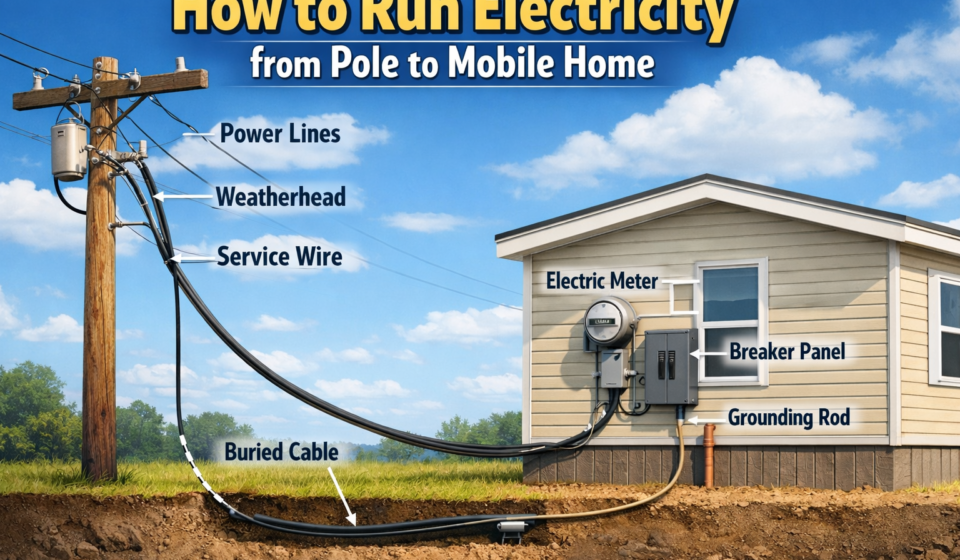
how to run electricity from pole to mobile home
Understanding How Electricity Reaches a Mobile Home
What Is a Service Drop
If you have ever looked at wires running from a pole to a house, you have already seen what electricians call a service drop. This is the final connection that brings electricity from the utility system into your property. It acts like a bridge between the power grid and your mobile home. Without it, there is no safe or legal way to receive electricity.
Think of it like a water pipeline. The main supply line carries water through the city, and the service drop is the pipe that delivers it directly into your home. In the same way, electricity travels through transmission lines and transformers before reaching your service connection.
Basic Flow of Electricity from Pole to Home
Electricity follows a clear path, and understanding this flow helps you avoid mistakes. Power moves from the grid to a transformer on the pole. From there, it travels through service wires into your meter. After the meter, it enters the main breaker panel and is distributed across circuits inside your mobile home.
Each step plays a critical role. If one part is installed incorrectly, the entire system can fail or become unsafe. This is why planning and proper installation matter so much.
Legal Requirements and Permissions
Why You Must Contact the Utility Company First
You cannot connect directly to a power pole on your own. The utility company owns the pole and the lines, and only authorized technicians are allowed to handle that connection. This is not just a rule. It is a safety requirement.
When you contact your utility provider, they will inspect your location and decide how power will be delivered. They will also guide you on where to place your meter and what type of connection is allowed.
Permits and Electrical Codes Explained
Before starting any work, you need permits from your local authority. These permits ensure your installation follows electrical safety standards. Codes cover everything from wire size to grounding methods.
Skipping permits might seem faster, but it often leads to problems. You may face fines, delays, or even be forced to redo the work. More importantly, ignoring codes can create serious safety risks.
Choosing the Right Type of Electrical Connection
Overhead Power Connection
An overhead connection is the most common choice for mobile homes. Wires run from the pole through the air to a service mast or meter pole. This option is usually cheaper and quicker to install.
It works well in open areas where there are no obstacles. However, overhead lines are exposed to weather. Strong winds, storms, or falling branches can damage them.
Underground Power Connection
An underground connection involves burying cables in a trench from the pole to your home. This setup looks cleaner and offers better protection from environmental damage.
However, it costs more because of trenching and materials. You also need to follow strict depth and conduit requirements. While the upfront cost is higher, many people prefer it for long term reliability.
Essential Components You Need
Meter Base and Main Disconnect
The meter base is where electricity usage is measured. It is usually installed outside your home or on a dedicated pole. Below it, you install a main disconnect switch that allows you to shut off power instantly if needed.
This setup is required for safety and inspection approval. Without it, your system will not be activated.
Breaker Panel and Distribution System
Inside your mobile home, the breaker panel distributes electricity to different areas. Each circuit has a breaker that protects against overloads.
This system ensures your appliances, lights, and outlets work safely. It also prevents damage caused by excessive electrical flow.
Grounding System for Safety
Grounding is one of the most important parts of your setup. It involves installing metal rods in the ground and connecting them to your system.
This creates a safe path for excess electricity to travel during faults or surges. Without grounding, your home and appliances could be at serious risk.
Step by Step Process to Run Electricity
Step 1 Site Inspection and Planning
Start by evaluating your site. Measure the distance from the pole to your mobile home and check for obstacles. Decide whether overhead or underground service is best.
You also need to calculate your electrical load. Most mobile homes require between 100 and 200 amps depending on usage.
Step 2 Install Meter Pole or Service Equipment
In many setups, you will install a meter pole on your property. This pole holds the meter and service equipment. It must meet specific height and clearance requirements.
Proper placement ensures safe connection and smooth inspection approval.
Step 3 Run Feeder Cable to Mobile Home
Next, run a feeder cable from the meter to your mobile home. This is usually a four wire system that includes two hot wires, one neutral, and one ground.
For overhead systems, cables enter through a weatherhead. For underground systems, cables run through conduit in a trench.
Step 4 Grounding and Bonding
Install grounding rods and connect them to your system using heavy wire. This step is required by electrical codes and is critical for safety.
Step 5 Inspection and Final Connection
After installation, a local inspector will check your setup. Once approved, the utility company will connect power and activate your service.
Cost Breakdown and Budget Planning
The cost of running electricity from a pole to a mobile home varies based on distance and setup type. Here is a general estimate:
| Component | Estimated Cost |
|---|---|
| Permits and Inspection | 100 to 500 dollars |
| Meter Base and Panel | 300 to 1500 dollars |
| Labor | 500 to 2000 dollars |
| Total Average | 1500 to 5000 dollars or more |
Longer distances and underground installations increase the cost. Planning your budget in advance helps avoid surprises.
Safety Tips and Common Mistakes
Electricity requires careful handling. Even small mistakes can lead to serious problems. Common errors include using the wrong wire size, skipping grounding, and ignoring local codes.
Another major mistake is attempting to connect directly to the pole. This is both dangerous and illegal. Always follow proper procedures and consult professionals when needed.
DIY vs Hiring a Licensed Electrician
Doing the work yourself may seem like a way to save money. However, electrical systems require precision and knowledge. Mistakes can lead to failed inspections or safety hazards.
Hiring a licensed electrician ensures everything is installed correctly. It also saves time and reduces the risk of costly errors later.
Final Thoughts
Running electricity from a pole to a mobile home is not just about connecting wires. It is a complete system that requires planning, compliance, and proper installation. From understanding how power flows to ensuring proper grounding, every step plays a role in safety and efficiency.
When done correctly, your mobile home will have a reliable power supply that supports all your daily needs without risk.
FAQs
1 Can I connect electricity from a pole myself
No, only the utility company can make the final connection to the pole.
2 What size service is needed for a mobile home
Most mobile homes need 100 to 200 amp service depending on usage.
3 Is underground wiring better than overhead
It is safer and more durable but costs more to install.
4 How long does installation take
It usually takes one to three weeks including permits and inspection.
5 What if my setup fails inspection
You must fix the issues before power can be connected.